


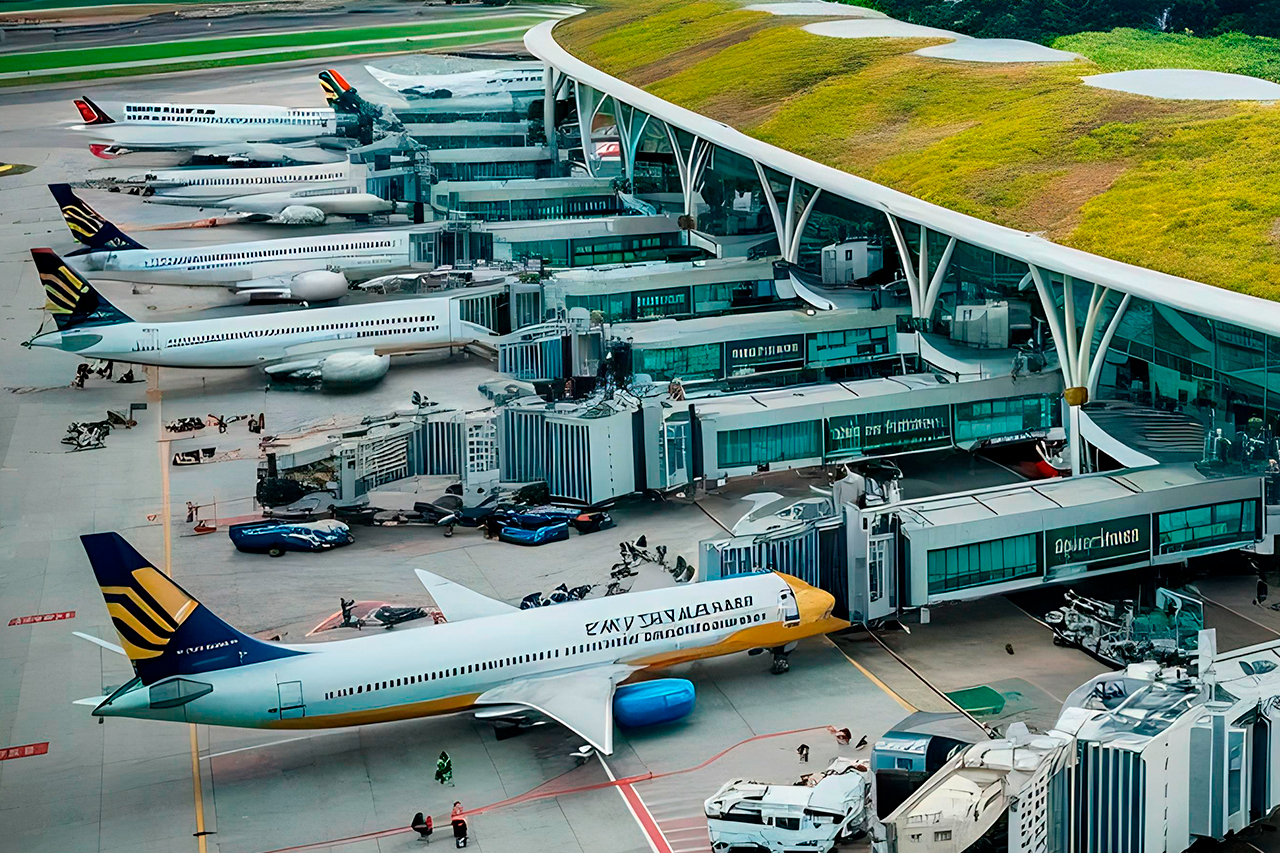
Bali’s rapid growth and surging tourism have placed severe strain on its main airport and narrow road networks. These challenges have transformed South Bali’s notorious traffic congestion into a critical operational challenge for locals, international travelers, and businesses. Recognizing that seamless mobility is essential to sustaining future economic growth, Indonesian transportation authorities and regional leaders recently met in Denpasar to establish a comprehensive strategy to modernize and upgrade the island’s overburdened infrastructure.
To deliver faster and more effective solutions, the government is adopting a practical, multimodal approach. This fresh approach includes the North Bali airport project, launching a high-speed coastal water taxi system in the south, and commercializing regional seaports to shift trade off the roads. These efforts lay a strong foundation for a more accessible and geographically balanced economy.
A Second Airport for Bali
Ngurah Rai International Airport in the south has long been Bali’s only air gateway. The airport was originally designed to comfortably handle around 24 million passengers a year. However, it’s projected to handle almost 25 million travelers in 2026 because of new international carriers like Etihad, T’Way Air, and Sichuan Airlines launching direct routes to the Island of the Gods. In response, the government is upgrading the airport to handle roughly 32 million passengers by 2031 through better use of existing space, AI-supported operations, and a new pedestrian bridge to ease landside congestion.
However, even with these big upgrades, officials think there’s a ceiling to how much the southernairport can absorb. Enter Letkol Wisnu Airport, a small airfield in Sumberkima, BulelengRegency. Instead of turning it into another commercial airport, the government plans to use it as a dedicated airport for emergency landings.
Additionally, the government has invited private investors to partner in the development and operation of the new airport. With relatively few land acquisition and environmental obstacles, the North Bali airport project presents a promising investment opportunity while supporting the government’s broader goal of driving economic growth in North Bali and distributing tourism more evenly across the island.
Ports Are Part of the Plan, Too
The airport discussion didn’t happen in isolation. The same meeting also covered a broader effortto strengthen sea transportation in North and East Bali. Celukan Bawang Port in Buleleng is set for revitalization, and it’s being prepared to handle Roll-On/Roll-Off ferry services to and from Jangkar and Banyuwangi in East Java. The goal is to relieve pressure on the busy Denpasar-Gilimanuk corridor, especially during peak travel periods such as the Eid al-Fitr homecoming season.
Three additional ports are also part of the plan: Kusamba in Klungkung, Amed in Karangasem, and Sangsit in Buleleng. Officials have indicated that Amed and Sangsit could be offered to private developers as logistics terminals or for other uses yet to be determined, while all of these locations are being considered for development as standalone tourism destinations in their own right. For businesses in logistics, marine tourism, or coastal hospitality, these developments are worth watching closely, since specifics on land offers and terms haven’t been finalized yet.
Cutting an Airport Run with Water Taxis
Another major initiative is a water taxi service connecting Ngurah Rai International Airport to Canggu in North Kuta. This is a popular area in Badung Regency that has become one of the island’s busiest hubs for not only digital nomads but also hospitality businesses and short-term rentals. However, anyone who has made that trip by road probably knows the main problem, which is traffic congestion. A short drive can take up to two hours during peak hours. However, with this water taxi service, that travel time can be cut down to around 30 minutes.
Furthermore, this proposed service will utilize high-speed vessels capable of comfortably transporting up to 200 passengers per trip. It’s also planned to operate daily from early morning through late afternoon. Primary boarding facilities are planned near the airport corridor with direct drop-off points along popular beach areas in Canggu like Berawa Beach.
The facilities in the Ngurah Rai area are expected to be completed by November 2026, though the timeline still depends on beach normalization work. Some observers have also raised questions about whether the project will include breakwaters to allow safe landings along a shoreline that is currently open to the sea, a detail that will be important for both safety and reliability once the service launches.
If it comes together as planned, the water taxi would do more than shorten a commute. It would effectively bring the airport closer to one of Bali’s most commercially active neighborhoods, with positive ripple effects for property values, hospitality demand, and the viability of businesses that depend on fast, predictable transit for guests and staff.
What Does This Mean?
For businesses observing Bali’s evolution, these infrastructure announcements represent a shift toward more sustainable, structured growth. Historically, commercial development in Bali has suffered from geographical concentration in the south. By providing fast water transit along the southern coast while establishing aviation and shipping hubs in the north at the same time, the central and provincial governments are creating the physical conditions necessary for more balanced economic development.
As the North Bali airport construction plans and detailed engineering designs progress, these projects will offer huge opportunities across real estate, maritime logistics, luxury travel, and aviation management. Most importantly, by addressing core transportation bottlenecks on both land and sea, Bali is positioning itself to remain a high-value destination for both residents and global visitors alike.
FAQ
Why is Bali investing in transportation infrastructure right now?
Tourist arrivals have pushed Ngurah Rai International Airport and the island’s main road corridors close to their limits. On top of that, the government wants to spread growth more evenly across the island rather than concentrate it in the south. Expanding capacity in the north and by sea can relieve that pressure while opening up new areas for development.
Who is driving these projects, and how far along are they?
The plans are being led jointly by the Bali provincial government and Indonesia’s Ministry of Transportation, with regional regents also involved in shaping local details. Most of the initiatives are still in the planning or early execution stage. This means timelines and terms are likely to shift as land, permitting, and funding questions get resolved.
What businesses benefit most from the North Bali airport construction plans?
Aviation services, logistics, and cargo operators stand to benefit most, since Letkol Wisnu is being positioned for charter flights, private jets, and freight instead of mass tourism. Hospitality and property businesses in North Bali could also benefit as improved air access drives more visitors and investment to the region.