


What’s the first thing that comes to mind when you hear the word ‘Bali’? Its vast culture? Bed of sands on its beaches? The island’s endless sun? Or… it’s growingly concerning traffic? When we think of Bali in recent years, the latter seems to go unnoticed. Bali public transport infrastructure has become the talk of town, posing the number one urban concern in the island. With millions of visitors every year, ease of mobility should be on top of policymakers’ priority, since a good public transport in Bali could bring substantial multiplier effect for the people’s economy.
The good news is, local authorities has picked up the conversation on early phase of tram route development, making a Kuta-Canggu line foreseeable. Getting around the island with a scooter surely is a familiar experience for many visitors. But getting around Bali without a driver and still hitting your daily 10,000 steps would now be possible.
So what can we expect from the future of public transport in Bali? We highlighted all past records and possible futures below.
What’s been going on so far?
The earliest development of public transportation in Bali was marked by the deployment of Trans Metro Dewata in late 2020. Six years after its operation, this bus rapid transit (BRT) system has become the primary mode of public transport for both tourists and locals. Although operations were briefly suspended in 2024-2025, Trans Metro Dewata resumed full operations across six corridors in mid-2025. Passengers can now travel to more than 300 stops across Bali, for just Rp4,400.
Talks about the construction of the LRT have also been going since the end of the Covid-19 pandemic. The initial infrastructure development stage was planned for two phases for two lines spanning a total of 29.5 kilometres tram corridors. The first phase covers the trip from I Gusti Ngurah Rai Airport to the Sunset Road, with five stations: airport, Kuta, Pura Desa Adat, Central Park, and Sunset Road. The following phase spans from the airport, bound for Nusa dua via Udayana University and Jimbaran.
Groundbreaking took place in September 2024 with 30metre-deep borehole. It’s in adherence to the sustainable development principles from the get-go, as well as the Tri Hita Karanacosmological concept: a philosophy of life centered in resilience and harmony between humans, Gods, the nature, and environment.
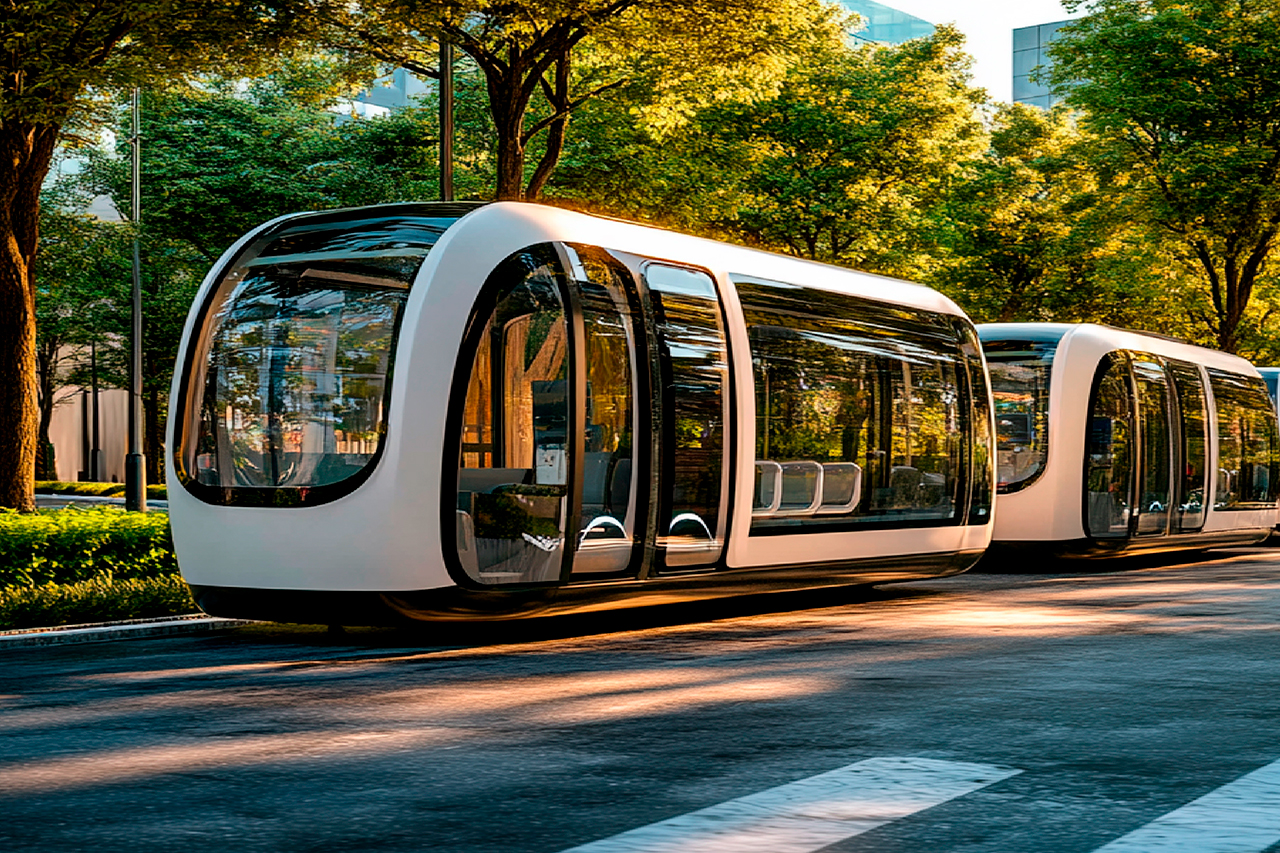
Unfortunately, updates on the Bali LRT project have been on halt as of 2026, due to adjustments to priorities and inconsistent resource availability. The Governor of Bali, Wayan Koster, stated that plans for the construction of the LRT have now been replaced by an autonomous rapid transit (ART) tram system, citing its cost and technological efficiency. While there surely has been change in plans, local government continues to explore the potential for a variety of public transport options in Bali, including buses, the LRT and the MRT.
The US$123 Million Bali Electric Tram Project
We may have to wait a little longer to see that Airport-Canggu LRT line come to fruition now that this ART-based tram system prioritises Kuta-Canggu line. Its early development phases looks more promising as the Badung Regency administrations – home to top tourist areas including Canggu, Seminyak, Legian, Kuta, Jimbaran and Uluwatu – has ballparked a budget of 980 billion rupiah as a part of their multi-year investment for land acquisition, starting in 2027.
Exploration of potential investments is currently underway, with one of the options being the state-owned railway operator PT. Kereta Api Indonesia expected to play a key role in financing and operating the system. Among the initial development measures taken is to widen main roads to 24 meters to accommodate tram corridors.
The regency also plans to develop park-and-ride facilities at strategic tourist hubs to support tram operations and reduce roadside parking, which authorities say contributes to congestion in Bali’s tourism areas.
Rumawan Salain, a transport and urban planning expert at Udayana University, emphasises the need to carefully assess the required tram infrastructure. He also pointed out that a tram system shouldn’t be the sole option for easing traffic. The future of public transport in Bali could benefit from a more comprehensive solution and that include optimising existing public transport services such as Trans Metro Dewata.
Bali Public Transport Infrastructure: Possibilities and Opportunies
Various studies have shown that the availability of a reliable public transport system contributes to better health outcomes for the population that uses it. Commuters who use public transport spend less money on fuel, parking fees, insurance and vehicle maintenance costs, and can therefore spend their budget elsewhere. Public transport also enables people to access public green spaces and recreational facilities where they can engage in physical activities. These are just a few examples of the positive impacts of an effective public transport system.
Should the Kuta–Canggu tram project actually go in the near future, its economic potential is highly promising. As it covers the busiest tourist area, ease of access for visitors is key to bringing consumers closer to markets. Effective public transport networks can unlock significant economic potential by reducing congestion costs, expanding labour markets and fostering dense, productive urban forms. In short, better walkability contributes to better social activity, leading to better economy.
A recent study by the University of Indonesia has revealed that, over the past 10 years, the operation of TransJakarta, the BRT system in Indonesia’s capital, Jakarta, has generated an economic value-added of nearly 80 trillion rupiah, 60 per cent of which (61.7 trillion) has ‘flowed back’ into the pockets of residents of DKI Jakarta. It is by no means impossible that island could reap the same benefits if the government and investors were to focus their efforts on developing a robust Bali public transport infrastructure, whether that be trams, light rail transit (LRT) or metro rail transit (MRT).