

Your next trip to Bali is bound for its pristine beaches and lush tropical jungle. While this makes for an ideal summer holiday, you may also need to pay attention to how the island experiences two major weather shifts throughout the year. As sunny skies replace the monsoon rains, it’s not always bright and warm here. The risk of localised bushfires, savanna blazes, and landfill fires rises significantly. Understanding Bali dry season fire risk is essential for staying safe, protecting both travellers and local communities alike.
Is wildfire risk high in Bali?
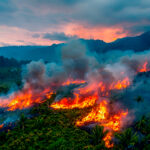
Unlike the massive, prolonged peatland forest fires that are currently impacting larger Indonesian islands like Sumatra and Kalimantan, island-wide forest fires are rare in Bali. Bali’s tropical rainforests in the central highlands retain moisture year-round. Instead, the island faces acute hazards from localized bushfires, brush fires, savanna blazes, and landfill fires.
From April to the first week of September, Bali’s Disaster Mitigation Agency (BPDB) recorded 217 bushfires. This figure includes all fires that occurred in buildings and residential areas, as well as wildfires. The most severe wildfire occurred in Buleleng, with the total affected area approximately 197 hectares. As a result of these fires, the BPDB estimates economic losses amounting to IDR 2.6 billion or USD 148,000.
That said, the island’s geography features diverse microclimates, causing varying degrees of fire in different regions. Here’s a snapshot of what to expect in each region. See which area you are planning a trip to:
Northern Bali (Buleleng, Karangasem, Pemuteran)
Northern Bali sits in the rain shadow of the central mountain chain, making it naturally drier than the southern or central regions, and especially requires persistent monitoring due to the Bali dry season fire risk.
Coastal districts near Pemuteran, Gerokgak, and Lovina feature arid scrublands, dry savanna terrain, and open hillsides that turn yellow-brown during the summer. Small sparks from roadsides or agricultural burning can spread rapidly across these parched hillsides.
Volcanic peaks: Mount Agung and Mount Batur ridges
Bali’s iconic volcanic peaks feature unique high-altitude micro-climates. The upper slopes contain pine forests, tall savanna grasses, and exposed rocky ridges subject to intense sun and high winds. During the dry season, low-lying brush on mountain slopes dries completely. Bushfires on these slopes are notoriously difficult to control because steep, inaccessible terrain limits access for fire engines.
Offshore islands: Nusa Penida dan Nusa Lembongan
Located just southeast of mainland Bali, the islands consist primarily of limestone terrain with thin topsoil that loses moisture rapidly. Water infrastructure on these islands is limited, making fire suppression a major challenge when brushfires break out in remote coastal cliffs or dry valleys.
South Bali open dumpsites: Suwung Landfill in Denpasar
One of the most persistent dry-season hazards in urban and suburban South Bali involves waste management infrastructure, such as the Suwung Landfill in Denpasar. As massive amounts of organic waste decompose under high heat, trapped methane gas builds up beneath the surface. Combined with prolonged heatwaves and low atmospheric moisture, these landfill sites face high risks of spontaneous combustion, leading to stubborn underground trash fires that burn for days or weeks.
Bali dry season fire risk: Key impacts for tourists and expats
Understanding the consequences of Bali’s dry season helps residents and travellers plan around seasonal challenges.
- Travel disruption. Regional haze may often affect flights and result in road closures. While the whole island is easily travelled by car or scooter, your next domestic destination may experience delays. Roadblock detours may also happen near active bushfires.
- Air quality & smoke. Brushfires and landfill blazes release fine particulate (PM 2.5) and carbon monoxide into the air. Depending on local wind directions, smoke plumes can drift toward populated tourist hubs like Sanur, Denpasar, Kuta, or Ubud, causing temporary drops in air quality that impact sensitive individuals, children, and elderly residents. A quick review of your itinerary for outdoor trips may save you from future hassles.
- Trekking disruption. When fire risks escalate on Mount Batur, Mount Agung, or within West Bali National Park, local authorities and forestry departments temporarily close trekking routes to ensure public safety. Hikers who ignore warnings not only face physical hazards but also stretch local search and rescue resources thin.
- Water scarcity. Extended dry weather strains municipal water distribution and natural spring reservoirs across Bali. When local fire departments respond to remote blazes, fetching water requires multiple trips to distant water points, slowing down suppression efforts and temporarily reducing water availability in surrounding villages.
Essential Fire Safety & Health Precautions
Whether you are a short-term visitor exploring Bali’s outdoors, a digital nomad residing in a villa, or a long-term expat, adopting smart precautions minimizes hazards and keeps you safe. A local AQI app may come in handy to monitor air quality status. When quality drops, be sure to keep N95/KN95-grade masks to filter out hazardous particulates.
Additionally, running an indoor air purifier could provide you with an even steadier peace of mind, and be sure to run safety checks with your accommodation/villa for smoke detectors or even emergency water storage.
For your outdoor activities, be sure to stay on marked trails and avoid smoking during hikes. Booking a trip with licensed local guides could save you from unwanted hassles.
Planning your next trip to Bali during the island’s dry season can be a bit tricky and may increase the chance of Bali dry season fire risk. As long as you know what to do to minimise that risk, you’ll have a hassle-free holiday!