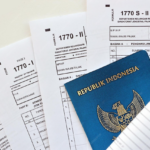



For many, the dream of living in Indonesia, from the bustling tech hubs of Jakarta to the creative co-working spaces of Bali, is inseparable from the reality of its bureaucracy. At the heart of this transition is the Indonesian Work KITAS, the “golden ticket” that transforms you from a visitor into a legal resident with the right to earn a living.
However, in 2026, simply “having a job” isn’t enough. With the introduction of the E23 visa index, Indonesia has refined its immigration system to be more role-specific, digital-first, and strictly regulated. Whether you are an industrial expert, a marketing guru, or a senior executive, understanding the nuances of your stay permit is the difference between a seamless professional experience and a costly legal headache. This guide breaks down the most pressing questions experts and expats are asking this year to help you stay compliant and focused on your career.
Can I apply for a Work KITAS on my own?
No. A Work KITAS requires a corporate sponsor (an Indonesian legal entity like a PT PMA or a local PT). You cannot sponsor yourself for work unless you are a shareholder/director in your own company (which would usually fall under an Investor KITAS instead of a Work KITAS).
Can I hold a Work KITAS and own shares in a different company?
You can own shares in another company (as a passive investor), but you cannot work for that company. If you are a Director in Company A (Work KITAS), you cannot perform any operational duties for Company B. To work for both, you would technically need a specialized “multi-position” permit, which is rare and difficult to obtain.
Can I work for multiple companies or do freelance work?
Strictly no. A Work KITAS is tied to one specific company and one specific job title. If you are caught working for another company or freelancing on the side, you risk hefty fines, deportation, and a re-entry ban.
Note: The only exception is if your employer has multiple subsidiaries and has explicitly included those locations/roles in your work permit.
What are the age and education requirements?
The Indonesian government generally requires:
Age: Between 25 and 60 years old (though directors/commissioners can often be older, up to 70).
Education: A university degree (Bachelor’s or higher) related to your job position.
Experience: If your degree isn’t a direct match, you usually need at least 5 years of work experience in the relevant field.
How long does it last, and can I extend it?
The duration depends on your contract and your company’s request:
Short-term: 6 months (often non-extendable).
Long-term: 12 months, extendable annually for up to 5 years.
2-Year KITAS: Available for certain high-level positions like Directors or Commissioners.
Is there a minimum number of days I must stay in Indonesia to keep the KITAS valid?
There is no “minimum stay” requirement. However, if you are absent from Indonesia for more than 6 months consecutively, immigration may question the “necessity” of your work permit upon your return, which could lead to complications during your annual extension.
Can I bring my family?
Yes. Once your Work KITAS is approved, your spouse and children (under 18) can apply for a Dependent KITAS (Index 317/E31). However, your dependents are not legally allowed to work in Indonesia under that permit.
What happens to my KITAS if I am fired or decide to resign?
Your KITAS is legally tied to your employer. If your employment ends, the company is required to process an Exit Permit Only (EPO). This officially cancels your stay permit and usually gives you 7 days to leave the country. You cannot stay in Indonesia to “look for another job” once the EPO is stamped.
Can I change my job title or office location without a new KITAS?
No. Your Work Permit (RPTKA) specifies your job title and work location. If you are promoted from “Manager” to “Director,” or if you are moved from a Jakarta branch to a Bali branch, your company must update your RPTKA and Notification. Failing to do this can result in a fine for “misuse of stay permit.”
Do I need to leave Indonesia to switch to a new employer?
Not necessarily, but it requires cooperation. You can perform an “on-site” sponsorship transfer if your current boss provides a Release Letter. However, you must still process an EPO, and your new sponsor must immediately apply for a new E23 visa.
Is there a minimum salary requirement for foreign workers?
While there is no single fixed number for all industries, the Ministry of Manpower generally rejects applications where the salary is too low to be considered “expert level.” In 2026, a monthly salary below IDR 15,000,000 to 20,000,000 is often flagged, as it’s seen as taking a job that a local could do for less.
When does my tax residency actually begin?
As a Work KITAS holder, you are considered a Domestic Tax Subject from the moment you arrive with the intent to stay for more than 183 days. You must apply for a Tax ID (NPWP) immediately. If you don’t have an NPWP, your employer is legally required to withhold 20% more income tax from your paycheck than they would from a local. Read more about it and get your Indonesian Tax ID here.
Can a small business or “Warung” sponsor my Work KITAS?
Generally, no. To sponsor a foreign worker, a company must meet specific paid-up capital requirements. In 2026, the company typically needs a capital of at least IDR 10 billion (for PT PMAs) or be a large-scale local PT. Small “dive shops” or family-owned cafes rarely meet the financial threshold to sponsor expats.
What is the $60,000 USD rule I keep hearing about?
This is often confused with the Work KITAS, but it actually applies to the E33G Remote Worker KITAS. If you are working for a foreign company (not an Indonesian one), you must prove an annual income of at least $60,000 USD. For a standard E23 Work KITAS (Indonesian employer), there is no fixed dollar threshold, but the salary must be “expert-level” (typically >IDR 15-20 million/month).
Can I work in Bali if my sponsoring company is registered in Jakarta?
Yes, but only if your RPTKA (Work Plan) specifically lists Bali as a work location. If your permit only lists “Jakarta” and you are caught working long-term in a Bali co-working space, you can be flagged for a location violation.
Have more questions? We’re here to help! Contact us now for expert advice on Indonesian Work KITAS and all your visa needs.