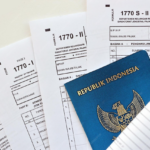



Dreaming of trading the daily grind for the sunset cliffs of Uluwatu or the cultural heart of Ubud? You aren’t alone. Indonesia remains a top-tier destination for retirees, but as we move through 2026, the pathway to staying in paradise has evolved. Whether you are eyeing the traditional Retirement KITAS Indonesia (E33F) or the premium Silver Hair Visa (E33E), navigating the latest immigration updates is the first step toward your new life.
In this guide, we break down the most frequently asked questions about the Retirement KITAS Indonesia, from the latest financial thresholds to the “no-work” traps you must avoid to keep your residency secure.
What is the minimum age for a Retirement KITAS in 2026?
While it was set at 55, 2026 regulations now benchmark the “Silver Hair” (E33E) and standard Retirement (E33F) visas at 60 years or older for many nationalities.
Can I still get a Retirement Visa if I’m only 55?
Yes, but you may need to look into specific “Pensioner” sub-categories or the Second Home Visa if you don’t meet the new 60+ threshold for the E33E series.
Can I bring my spouse if they are under 55?
The Short Answer: Yes.
While the primary applicant must meet the age requirement, the spouse is categorized as a Dependent. Your spouse can be 30 or 50; as long as you are legally married, they qualify for a Dependent KITAS (C317).
Proof Required: You must provide an officially translated and legalized marriage certificate. In 2026, many nationalities can do this digitally via the Apostille process, which Indonesia joined recently.
What Happens if the Primary Holder Passes Away?
Immediate Cancellation: Since the dependent’s visa is legally “tethered” to the primary holder’s visa, the death of the primary holder technically terminates the sponsorship. The dependent visa becomes invalid.
The 60-Day Grace Period: Generally, immigration allows a grace period (often 30 to 60 days) to settle affairs. During this time, the surviving spouse must either:
- Switch to their own Retirement KITAS (if they are now of age).
- Apply for a different visa (like a Second Home Visa or an Investor KITAS).
- Process an EPO (Exit Permit Only) and leave the country.
How much money do I need in the bank to retire in Indonesia?
For the standard E33F, you need proof of income (pension) of at least USD 3,000 per month. For the 5-year Silver Hair visa, you must also deposit USD 50,000 into a state-owned Indonesian bank.
Do I need to show a pension or just savings?
Most applicants must show a stable monthly income (pension). However, some visa types allow a large lump-sum deposit (like the USD 130,000 for a Second Home Visa) as an alternative.
Can I work on a Retirement KITAS?
Absolutely not. The “Statement of Non-Employment” you sign during the application is a binding legal contract. In 2026, “work” is defined broadly by Indonesian Manpower laws. It includes:
- Receiving a salary from an Indonesian company.
- Selling goods or services locally (even at a Sunday market).
- Managing a local business (e.g., “helping out” at a friend’s café).
The Risk: Unlike a minor traffic fine, working on a retirement visa is considered a criminal violation of immigration status. It typically results in immediate deportation and a “Red Notice” blacklist, preventing your return for years.
Can I work remotely for a company back home on a Retirement KITAS?
No. All Retirement visas and KITAS (E33 series) come with a strict “Statement of Non-Employment.”
If you are on a Retirement KITAS (E33 series), you have explicitly stated you are retired. If immigration finds you are working 40 hours a week on Zoom, they may argue you should have applied for the E33G instead.
The “Laptop” Exception: Checking occasional emails or managing your personal investments is generally ignored. However, if your primary purpose for being in Indonesia is to work for an overseas employer, the Retirement KITAS is no longer the correct legal path. If you are caught receiving a salary or managing a business (even remotely) without a Remote Worker Visa (E33G), you risk deportation.
Do I have to hire an Indonesian maid?
Yes, one of the unique requirements for the standard Retirement KITAS is a commitment to hire at least one (and sometimes two) local domestic workers to support the local economy. While enforcement varies by province, you are technically required to provide their KTP (ID card) during your annual renewal. The Silver Hair (E33E) and Second Home visas have recently relaxed this specific requirement in favor of financial deposits.
Can I buy property with a Retirement KITAS?
You can lease property (Hak Pakai) or, under the Second Home/Golden Visa schemes, purchase certain types of luxury apartments or houses.
Will I become an Indonesian tax resident on a Retirement KITAS?
Yes. If you stay in Indonesia for more than 183 days in a 12-month period, you are legally a tax resident. However, Indonesia has Double Taxation Agreements (DTA) with over 60 countries (including the US, UK, and Australia) to prevent you from being taxed twice on the same pension. You will likely need to obtain a Tax ID (NPWP) to open certain bank accounts or buy a vehicle. Read more about it and get your Indonesian Tax ID here.
Do I need to notify immigration every time I leave the country?
No. In 2026, all Retirement KITAS come with a MERP (Multiple Exit and Re-entry Permit) built-in. You can fly in and out as much as you like.
Warning: if you plan to leave and not return (ending your residency), you must process an EPO (Exit Permit Only). Leaving without an EPO can lead to “Blacklisting” or fines if you try to return on a different visa later.
Have more questions? We’re here to help! Contact us now for expert advice on Retirement KITAS Indonesia and all your visa needs.