


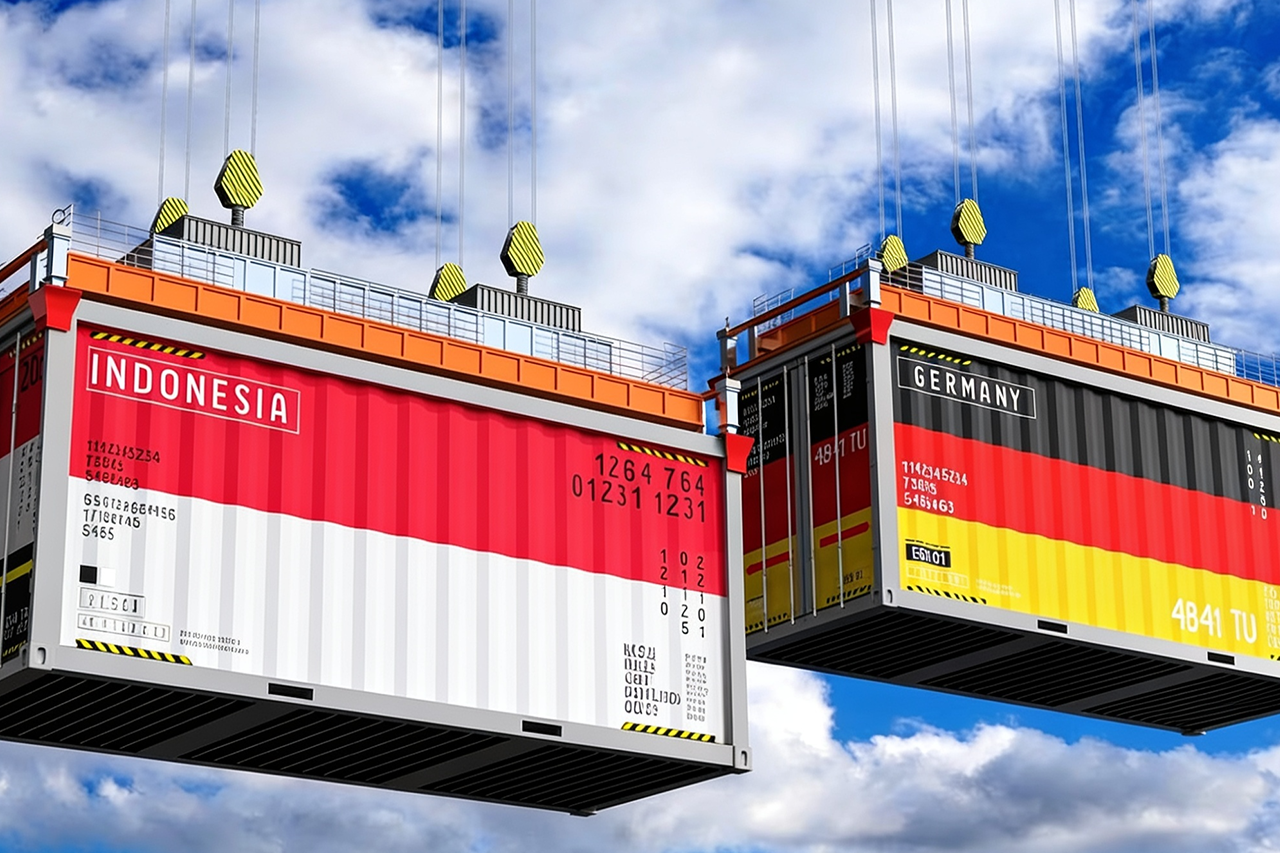
The recent bilateral meeting in Jakarta between Indonesian President Prabowo Subianto and German President Frank-Walter Steinmeier provided a crystal-clear roadmap for the next wave of economic growth. The two leaders officially agreed to deepen economic cooperation, focusing on mutually beneficial trade and investment. However, looking past the diplomatic handshakes, this agreement serves as a massive catalyst for international capital.
For European enterprises and global investors looking at investing in Indonesia’s strategic sectors, the alignment between Southeast Asia’s largest economy and Europe’s industrial powerhouse creates unprecedented, low-friction entry opportunities.
The Catalyst: IEU-CEPA and the European Gateway
One of the most critical takeaways from the bilateral talks is the aggressive push to finalize the Indonesia-European Union Comprehensive Economic Partnership Agreement (IEU-CEPA). President Prabowo explicitly emphasized the need to reach a substantive conclusion, leaning on Germany to champion this finalization within the internal halls of the EU.
Why this matters to you: Historically, navigating trade tariffs and regulatory barriers between Southeast Asia and Europe has been a complex endeavor. The realization of IEU-CEPA (backed by Germany’s industrial lobby) will drastically lower tariffs, harmonize standards, and streamline customs. Additionally, bilateral ties are being strengthened by the Competitiveness Industrial Modernization and Trade Acceleration Program (CITA), designed specifically to boost industrial agility and accelerate cross-border trade.
The Business Playbook: The 4 Golden Investment Sectors
During the summit, the Indonesian government did not just ask for general investment; they pinpointed exactly where foreign capital will be welcomed with open arms and favorable policies. President Prabowo directly invited German (and by extension, global) investors to expand into four high-priority verticals:
1. The Energy Transition
Indonesia is actively pivoting away from heavy coal reliance toward a green economy. There is an urgent need for foreign expertise, technology, and capital in solar, geothermal, and hydropower infrastructure. Investors who bring proven European renewable technologies to the Indonesian grid will find lucrative public-private partnership (PPP) opportunities.
2. Industrial Downstreaming (Hilirisasi)
Indonesia’s days of merely exporting raw commodities are over. The government’s strict “hilirisasi” policy mandates that raw materials (like nickel, copper, and bauxite) be processed locally to generate added value. Foreign manufacturers who set up processing plants, smelters, and refining facilities within Indonesia are heavily incentivized and stand to dominate the local supply chain.
3. Electric Vehicle (EV) Ecosystem Development
By combining its massive domestic consumer market with its dominance in nickel reserves (the core component of EV batteries), Indonesia is positioning itself as the EV manufacturing hub of Southeast Asia. Germany’s automotive legacy makes this an ideal match. Global auto-manufacturers and battery tech firms should view Indonesia not just as a consumer market, but as their primary Asian manufacturing base.
4. The Semiconductor Industry
In an era of intense geopolitical friction, global tech companies are frantically diversifying their semiconductor supply chains. Indonesia is stepping up to capture this “China Plus One” manufacturing exodus. Incentivizing semiconductor fabrication and assembly plants is a strategic priority, offering high-tech investors a neutral, stable, and cost-effective operational hub.
Strategic Takeaways for Foreign Enterprises
The alignment between Indonesia and Germany is a strong vote of confidence in Indonesia’s economic stability and regulatory maturity. As a foreign investor, the strategy is clear:
Align with State Priorities: Capital deployed into the four verticals mentioned above will face fewer regulatory hurdles and benefit from tax holidays and investment incentives.
Leverage B2B Partnerships: Utilize initiatives like the CITA program to find local industrial partners, modernizing local facilities with European technology.
Prepare for IEU-CEPA: Forward-thinking European companies should begin structuring their Indonesian subsidiaries and supply chains now, ensuring they are fully operational the moment the IEU-CEPA trade gates open.
The Bottom Line
The narrative of investing in Indonesia’s strategic sectors is rapidly shifting from natural resources to high-tech manufacturing and green energy. With Germany paving the regulatory way within Europe, the window for early-mover advantage in this newly streamlined economic corridor is right now.
Are you an international enterprise evaluating your manufacturing footprint or clean energy investments in Southeast Asia? Partner with us, your strategic advisor, to navigate Indonesia’s investment incentives, ensure compliance, and maximize your ROI in the region’s fastest-growing sectors.